Winning Banbridge Farm Business Recognised Leader in Sustainability
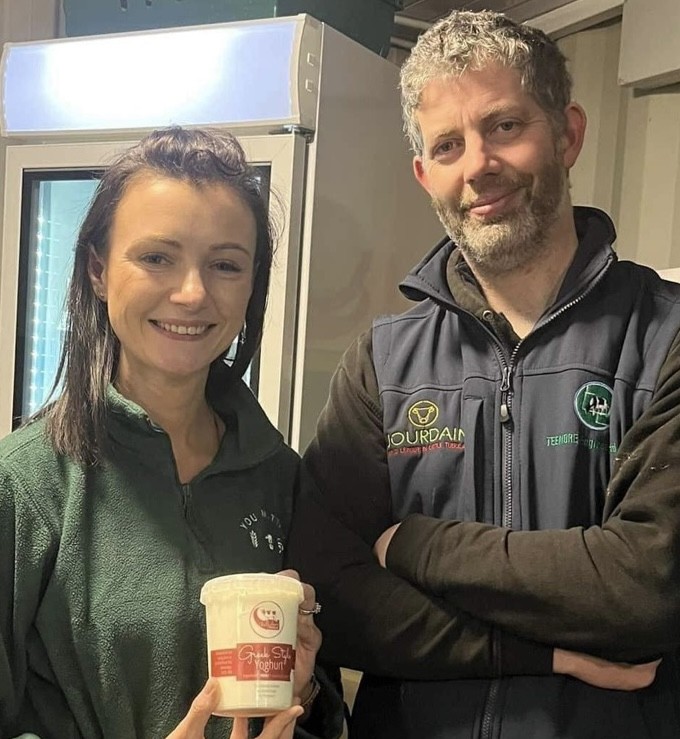
Banbridge-based Ballydown Milk, a highly successful agri-business, has become a
leader in sustainable technologies on a family farm.
A FoodNI member, the farm’s commitment to leading-edge technologies to support
the environment were recognised in the recent Farming Life/Farm Week NI Farming
Awards 2026 in the immensely important category for the Sustainable Initiative of the
Year 2026.
Promoting sustainability and preserving the environment are pillars of the Northern
Ireland Food Strategy and Action Plan from the Department of Agriculture, the
Environment and Rural Affairs (DAERA) that was drafted in collaboration with many
industry and community bodies such as Food NI, the region’s promotion body for
food and drink.
The focus on sustainability in the influential awards for Northern Ireland’s largest
industry reflects the News Letter/Farming Life support for this hugely important
strategy.
The annual farming awards, the most important in the UK and Ireland, have been
celebrating the innovation, diversification, talent and entrepreneurship which has
been showcased across the agri-food sector in Northern Ireland for more than a
decade.
Ballydown, a family-run farm outside Banbridge, was recognised in the popular
awards for eco-friendly practices like rainwater harvesting and reforestation efforts to
lower its carbon footprint.
The farm is an excellent example of the enterprise and innovation in the local
farming sector. It has diversified significantly over recent years and how produces a
wide range of successful dairy products that include fresh milk, ice cream, cream
and flavoured smoothies. A natural yoghurt is a recent addition to the portfolio of
enterprise.
The small business also gained UK Great Taste Awards for its whole milk and
yoghurt in July.
James Martin, who owns the farm with wife Stephanie, says: “We were thrilled to win
the Farming Life award for our initiatives on sustainability. At Ballydown Farm, we’re
passionate about producing delicious dairy products while caring for the environment
we all share.
“Sustainability is now at the heart of everything we do, and we’re committed to
minimising our footprint and leaving a positive impact on our land.
“We believe in using water wisely. That’s why we implemented a rainwater
harvesting system. This system captures rainwater from our rooftops and stores it in
large tanks.
“The collected rainwater is then used for various farm functions, including watering
our cows. This reduces our dependence on freshwater resources and promotes
responsible water management,” adds James, a fourth generation farmer.
As part of the couple’s visionary approach to the environment, they embarked on a
ground-breaking project with the construction of an innovative anaerobic digester
plant. This state-of-the-art facility transforms farm waste products like manure and
silage into clean, renewable biogas.
The biogas fuels a generator, producing electricity that powers the entire farm
operation. The surplus electricity is even exported to the local grid, providing clean
energy for homes in our community. This significantly reduces the farm’s reliance on
fossil fuels and lowers its carbon footprint.
“We understand the importance of healthy ecosystems,” continues James. “To
further enhance sustainability, we’ve also taken steps to reforest areas of our land
unsuitable for agriculture. By planting new trees, we’re contributing to carbon
sequestration, improving air quality, and creating valuable wildlife habitats,” he adds.
“It’s also immensely encouraging to win recognition for our whole milk and natural
yoghurt in such a significant event as the Great Taste Awards.
The yoghurt is handcrafted without any added sugar, other additives or thickeners. It
is authentically strained by hanging in a cheese cloth bag, Greek style.
The yoghurt is described by James as “creamy, mild and velvety” and “not at all
sharp or bitter”.
The milk is sourced from the farm’s dairy herd which is also sold directly to the public
from a vending machine and in a farm shop opened by the couple in May 2021. The
decision to sell fresh milk to the public proved a huge success and encouraged the
development of yoghurt.
“We began looking into milk vending in 2020 and decided to buy processing
equipment that would also enable us to make yoghurt as well,” James explains. The
success of the milk sales, however, delayed the plan for yoghurt production for
several months.
The enterprising couple started putting fresh milk aside once a week for yoghurt
production and began to experiment in 2022. They learned from experience,
pasteurising the milk, adding culture and eventually created a yoghurt base they
were able to work with.
“Over a period of a year – and a lot of failures and tears – we created a yoghurt,
taking guidance from many sources including the College of Agriculture, Food and
Rural Enterprise at Loughry, Cookstown
“The process required great determination. I’ll never forget the morning – around
4.30am-and the sigh of relief and pure excitement when we achieved our own
yoghurt,” adds Stephanie.
The new yoghurt then passed successfully essential safety and shelf-life tests,
enabling Stephanie to start work on the packaging and branding for a successful
public launch at local delis and markets.
The Agri-Business of the Year in the Farming Life/Farm Week Awards was Pilgrim’s
Europe in Craigavon.