Balloo Inns Showcases Recognition of Award-Winning Team During Chef Appreciation Week

Award-winning gastro-pub group, Balloo Inns, is in the celebratory spirit this Chef Appreciation Week. Recognising the skills, talent and work ethic within the team, Balloo Inns will be highlighting the talent within the team by showcasing the chefs who have created some of the delicious dishes.

A specially curated menu of the chefs’ top picks will be running throughout the week from 12th – 18th August. Each chef has selected their own personal favourite dish to serve up to customers. The competition is on, as the chef whose dish gets ordered the most will take home the crowning title of ‘Chef of the Week’.

Chef Appreciation Week is one of a number of initiatives that Balloo Inns has developed to invest in its team throughout the year. Working with Inspire Workplace, Balloo Inns has also introduced an employee assistance programme. Inspire Workplace offers 24-hour support and follow up face-to-face counselling to all full-time Balloo Inns Group employees who may be struggling with stress, anxiety or any personal issues.

Ronan Sweeney, Balloo Inns Managing Director and owner, said, “We are always extremely grateful to our chefs across our restaurants for their continuous hard work throughout the year. Chef Appreciation Week has provided us with the extra opportunity to demonstrate how much we value and appreciate their work with us. We have been able to highlight not only their incredible work ethic, but their tremendous combined talent to our customers through our special menu of chef selections.

“Through our employee initiatives with Inspire Workplace, we are striving to create the best working environment for each of our employees. All our employees play a significant part in the success of our restaurants. Our business cannot succeed without happy, motivated employees and their wellbeing is a big priority for us.”

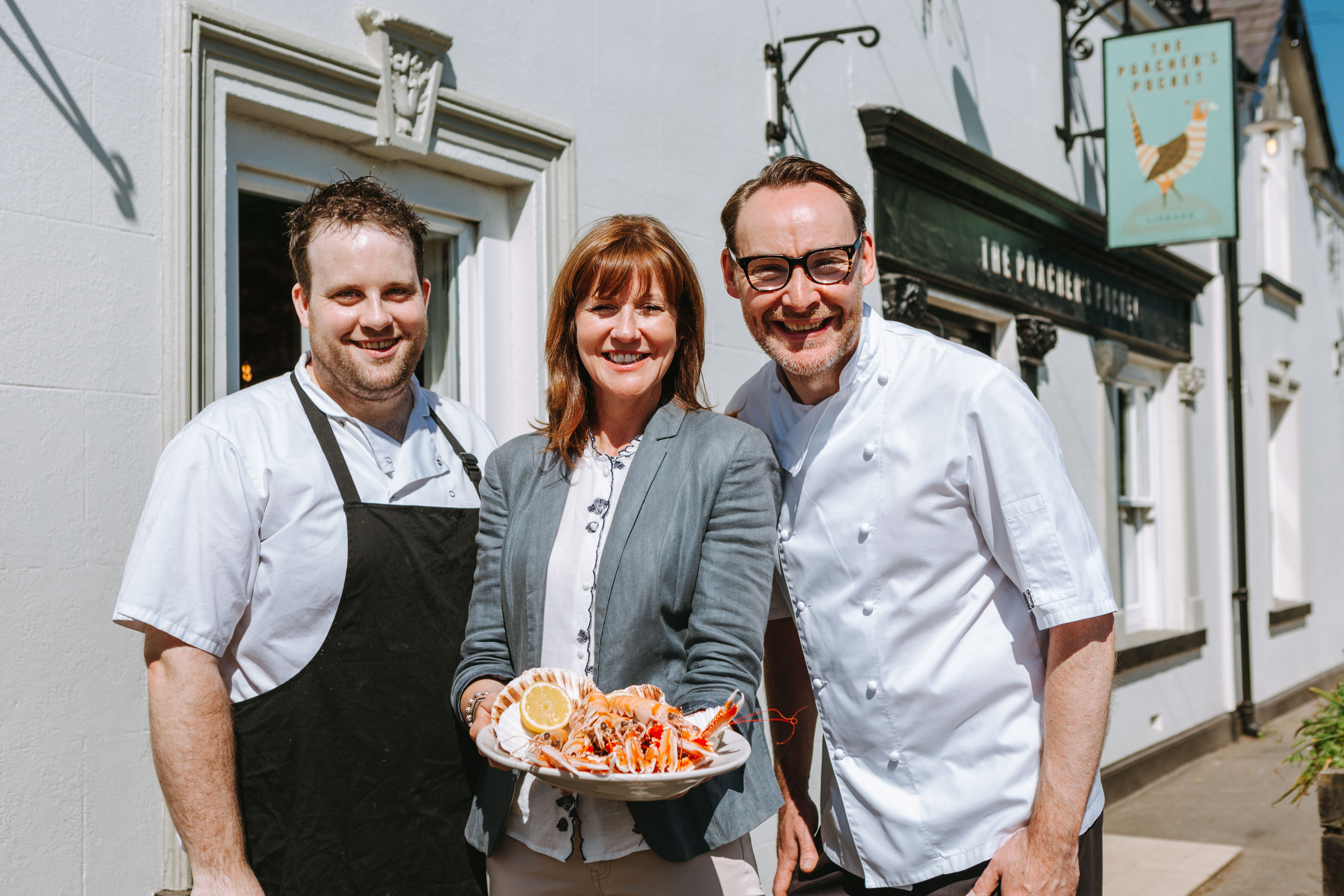
Balloo Inns Group employs around 120 staff across its three restaurants: The Parson’s Nose in Hillsborough, Balloo House in Killinchy and Poacher’s Pocket, Lisbane.

The award-winning restaurants receive critical acclaim with all three retaining their spot in the prestigious Michelin ‘Eating Out In Pubs’ Guide 2018.

For more information visit: www.ballooinns.com

Gut health and mood to be explored at Belfast conference

Planting an idea for a healthier diet, left, Sharon Machala of Making Connections and Dearbhla Reynolds, The Cultured Club, both based in Bangor.


The influence of healthy eating on gut health and mood will be explored at a major conference in Belfast in September.

Depression currently affects up to half a million people in Ireland, causing severe trauma for sufferers and their loved ones.  But what if happiness was made in your bowels instead of through your thoughts?  This is the question to be addressed at the conference, Good Food and The Psychobiotic Revolution on 20 September, by leading experts.

Behind the important initiative are businesswomen Sharon Machala and Dearbhla Reynolds, both from Bangor and the key personalities in Cultured Connections, a unique collaboration focused on nutrition.

Both run small food-focused businesses and are collaborating to increase awareness of the importance of protecting and feeding good bacteria in the digestive system. Both also share a love of good and healthy food with outstanding flavours.

Sharon runs Making Connections, a consultancy specialising in brokering connections, especially between chefs and producers, within the local food industry, while Dearbhla is a food writer and author of The Cultured Club – Fabulously Funky Ferments, a widely acclaimed guide to the health and other benefits of fermented foods. She’s described as a “culinary radical’. Sharon also has a successful track record in the local food industry including a key role with Food NI, the pioneering promotion body.

They are convinced that choosing to eat the right mood boosting foods can help overcome depression and reduce a costly dependence on prescribed anti-depressants.

Sharon, who has vast experience in food processing and catering, explains: “It is clearer now than ever before that there are certain gut bacteria which can positively influence our mood and behaviour – in other words, we are what we eat.”

This conviction is backed up by academic research carried out by Ted Dinan, Professor of Psychiatry at University College Cork (UCC), one of the world’s main experts on the link between mental health and our gut health.

“In his laboratory, Prof Dinan found that the consumption of certain probiotic bacteria can actually alter the chemistry of the brain. These microbes that chase the blues are called ‘psychobiotics’, Sharon adds.

Prof Dinan, Principal Investigator in the Alimentary Pharmabiotic Centre at UCC will be a key contributor to their conference ‘Good Mood and Food -The Psychobiotic Revolution’ on 20 September.

Other experts taking part in the conference, the first of its type to be held in Northern Ireland, include Prof Siobhan O’Neill, Professor of Mental Health Sciences at Ulster University.

This event will include a special lunch comprised of mood boosting foods as well as a workshop on fermentation and probiotic drinks.

Why choose fermented foods?  “Fermentation is actually one of the oldest techniques for preserving food. What the process does is to encourage essential and good bacteria to flourish in the gut,” explains Dearbhla. “It’s a good source of probiotics that aid digestion. So, adding a daily dose of fermented foods to your diet can have an extraordinary impact on health.


“Fermented foods have been shown to promote digestive ease for people suffering with inflammatory disorders, help manage sugar and carb cravings, decrease incidence of allergies and sensitivities, generally boost the immune system and contribute to an overall sense of well-being,” she continues.


Sharon adds: “What we eat determines our mood, specifically how foods rich in probiotics can affect mental health. Fermented foods can ease anxiety and counter depression.


“There’s growing recognition worldwide of the benefits of a diet that includes plenty of fresh vegetables and other plants,” she says. “Fermentation enables plants to be eaten throughout the year and also involves a process that kills off ‘bad’ bacteria.”


The process, Dearbhla explains, can involve submerging fresh vegetables in a salty brine during preparation to kill off dangerous, pathogenic bacteria. The good bacteria break down lactose and other sugars and starches in the food, making digestion easier. And once they reach the gut, they continue to help break down food and keep out potentially serious threats to health like E. coli and C. difficile.

Fermented vegetables, for instance, begin with lacto-fermentation, a method of food preservation that also enhances the nutrient content of the food. The action of the bacteria makes the minerals in cultured foods more readily available to the body. The bacteria also produce vitamins and enzymes that are beneficial for digestion.

Dearbhla adds that almost any root vegetable can be fermented, and fermenting farm-fresh produce is “a great way to provide good nutrition year-round! Ferment one vegetable alone or create mix of many different kinds, along with herbs and spices, for a great variety of cultured foods”.

 

To purchase your ticket, please visit;  https://www.eventbrite.com/e/good-mood-food-the-psychobiotic-revolution-tickets-47059772045

First US export sales for Holmes Bakery

Food NI member Holmes Bakery in Northern Ireland has won its first business in the US for its award winning biscuits.

The bakery, which is based at Portadown in Co. Armagh, is supplying a 12-strong range of premium quality biscuits, including traditional Irish flakemeal and fruit infused shortbread, to gourmet grocer Central Market in Texas.

Gillian Castles, brand administrator of the family-owned and managed bakery, says: “Winning our first business in the US has given everyone in the company a real buzz.

“We’ve been working on this export business for some time and will be aiming to build on the breakthrough with Central Market, an award winning supermarket chain with nine outlets across Texas.

“We are confident that the quality and outstanding taste of our biscuits will lead to further export business in the US and other market,” adds Gillian.

The business in Texas was secured through the company’s distributor in Britain. It follows a listing for six lines, including traditional Northern Irish traybakes, by Ocado, the leading UK online retailer.

Central Merchant, established in Texas in 1994 and now headquartered in Dallas, specialises in a comprehensive range of gourmet food and drink. It among the most successful grocers in Texas.

Holmes Bakery sells a wide range of handcrafted traybakes and biscuits throughout Northern Ireland the UK and further afield.

The bakery, earlier in August, added to its string of UK Great Taste Awards by gaining recognition for an Oaty Biscuit Made with Real Irish Butter.

Holmes Bakery was acquired by husband and wife team Harold and Daphne Irwin in 2009. The extensive range of premium products is manufactured from a purpose-built bakery.

Moy Park heads Top 100 Northern Ireland companies

Food NI member Moy Park, Europe’s largest poultry processor, has retained its position of Northern Ireland’s biggest company. The processor sells throughout Europe and is the only Northern Ireland company with a turnover close to £1.5 billion.

Moy Park, which has its European headquarters at Craigavon in Co. Armagh, heads Northern Ireland’s Top 100 Companies in the annual survey published by Ulster Business magazine. Moy Park leads 22 agri-food companies in the list.

Other Food NI member companies listed in the list include dairy processor Dale Farm, Fane Valley Group, a producer of meat and breakfast cereals, leading wholesaler Henderson/Spar, Tayto Group, LacPatrick Dairies, Lynas Wholesale

The survey shows that Northern Ireland’s biggest companies have boosted their profits by almost 80 percent in the space of a year. Moy Park heads the listing for the seventh year in a row.

Chris Kirke, president of Moy Park, said: “We’re tremendously proud to be recognised as Northern Ireland’s top company once again, particularly as it coincides with our 75th anniversary celebrations.

“It’s the great people within the business that makes Moy Park the successful company it is today. It is our talented team and our focus on enhancing operations across our facilities that will ensure we can continue to innovate, thrive and grow.”

Moy Park supplies poultry products to retailers and foodservice organisations throughout Europe and is now owned by Pilgrim’s Pride of the US. It processes six million fresh chickens every week.

Overall, turnover among the Top 100, which is now in its 30th year, increased by around nine per cent, rising from £21.88 billion to £23.85 billion, when comparing company accounts, year-on-year.

Pre-tax profits for those making the list grew by 79 per cent, rising from £517.5 million to £924.9 million.

Natural fruit vinegars from Burren Balsamics win in Britain

Food NI member Burren Balsamics, a specialist in award-winning natural fruit infused vinegars, will feature on the Christmas catalogue of The Cress Co, Scotland’s premium food distributor.

The Cress Co, which is based in Dunfermline, is showing several of Burren’s most successful vinegars including Blackberry and Thyme, Bramley Apple, and Gold. Cress Co distributes to a network of independent retailers.

Susie Hamilton Stubber, the founder and managing director of Burren Balsamics, which is based at Richhill in county Armagh, says: “I am delighted that my hand crafted vinegars are now included in the Christmas catalogue of such a successful and quality conscious food distributor.

“This is another important development in my drive to expand sales in Britain, now my most significant markets. It follows an extensive marketing campaign in Britain that has included participation in major food shows and represents another major endorsement of the premium quality and innovation of my portfolio of fruit infused vinegars for both retail and food service,” she adds.

Mrs Hamilton Stubber, an experienced chef, formed Burren Balsamics in February 2014 to develop fruit infused vinegars for foodservice and delis in Northern Ireland and has since expanded sales to Britain and the Republic of Ireland.

The small batch producer has won a series of awards, including Great Taste Awards and Blas na hEireann Irish National Food Awards for the products, which are all produced in Northern Ireland.

The company recently gained a three-star gold in the Great Taste Awards for an innovative product developed with venison from Colebrook Park, a country estate in Fermanagh.

The successful ready-to-cook product was Saddle of Colebrooke Venison. The pack includes blackberry and thyme gel from Burren Balsamics.

New Gouda-style goat’s cheese from Northern Irish artisan

Food NI member City Cheese, an artisan cheese maker, has launched a Gouda-style goat’s cheese.

The new handmade cheese, developed by City Cheese founder Christo Swanepoel, has been matured over six months and is now being rolled out to delis and foodservice in Northern Ireland. “It’s a natural, semi soft cheese that’s handcrafted slowly and left for six to eight months to mature to develop a natural rind,” he says.

“While it’s very definitely a goat’s cheese it has a mild, creamy flavour,” Mr Swanepoel adds.

Mr Swanepoel, a South African chef now resident in Northern Ireland, has extensive experience in creating different cheeses, including raw cow’s milk products, and has won local and national awards for taste and quality.

The new goat’s cheese is produced by hand by Mr Swanepoel at the company’s small creamery in Ballywalter in Co Down using a Gouda recipe.

He is bringing the distinctive flavours of his native South Africa and especially the Dutch influences there to the local artisan cheese scene.  He is the only artisan producer of goat’s cheese in Northern Ireland.

Mr Swanepoel, who trained initially as a gourmet chef in Pretoria because of his love of food, has been resident in Northern Ireland for around 10 years. He decided to explore artisan cheese making as a career direction. “I’d been keen on cheese in South Africa and learned a lot about Dutch cheeses from my wife and her parents. This led me to look at the market and to identify opportunities about artisan cheese,” he says.

“I started making samples of different styles of cheese for friends to taste. The feedback was immensely positive,” he says. “Cheese-making is an important and developing sector in both South Africa and Holland, and I grew up enjoying cheese there,” he adds.